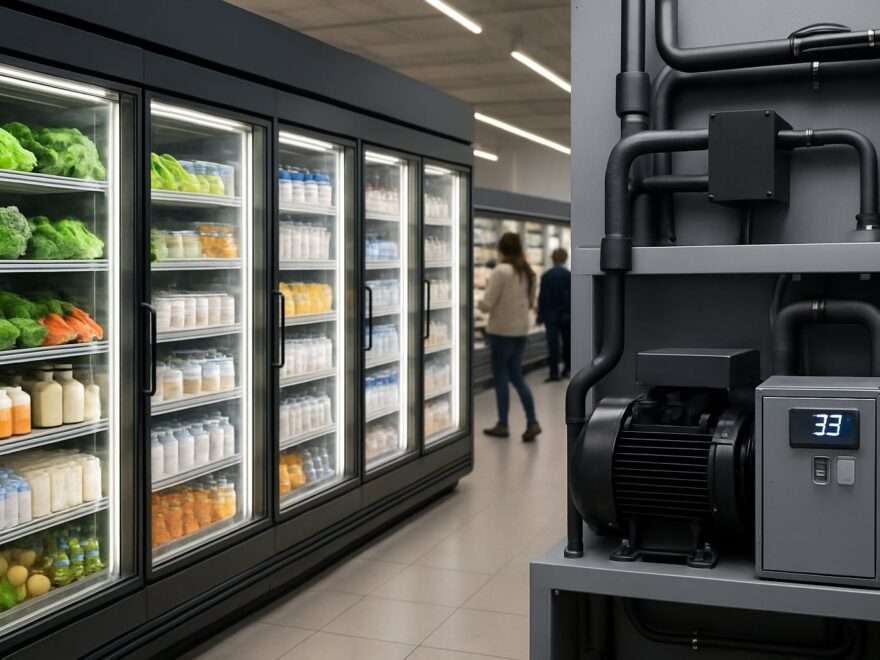
Refrigeration Mentor Teaches Your Pathway to Super Market Refrigeration Mastery
Working in supermarket refrigeration isn’t just about basic HVAC skills. The systems in grocery stores use advanced technologies like CO2 refrigeration, secondary fluid setups, and parallel rack configurations that really require a deeper level of expertise.
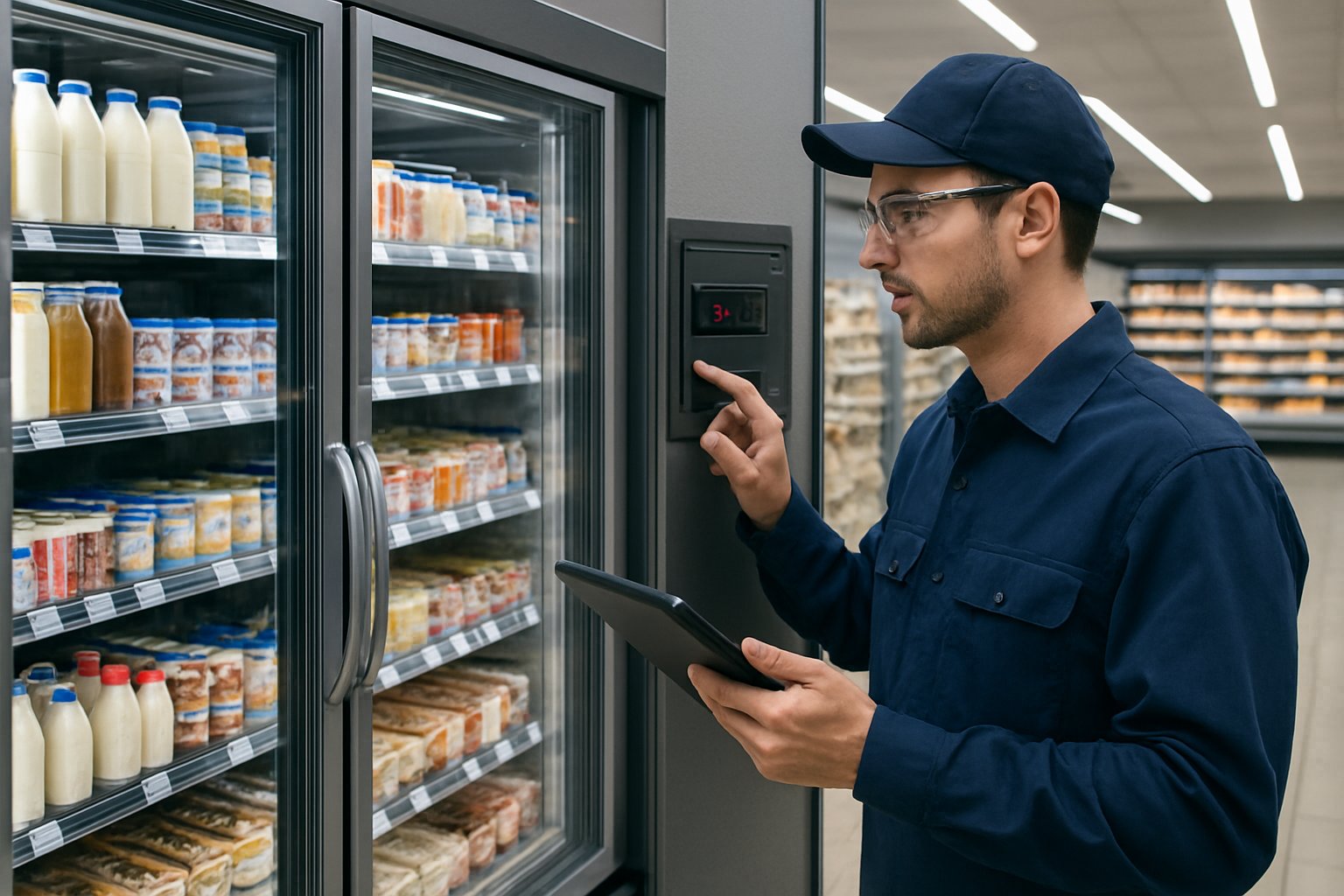
Refrigeration Mentor’s Supermarket Academy provides comprehensive training and walks technicians from the basics all the way to advanced troubleshooting. The training moves through four levels, starting with core system operations and ending with detailed component optimization.
I’ll break down how this program works and the technologies you’ll get your hands on. The certification process? It can really open doors in your career.
You’ll see what makes supermarket refrigeration unique—specific systems, components, and the kind of troubleshooting that separates experienced techs from newbies.
Getting Started with Refrigeration Mentor
Refrigeration Mentor designs technical training for refrigeration professionals who want to level up. The platform offers flexible on-demand learning and industry-recognized certifications.
Overview of Refrigeration Mentor Training
Refrigeration Mentor focuses on mentoring and educating refrigeration pros, especially in commercial and supermarket systems. There’s a variety of learning formats to suit different needs.
I can jump into comprehensive courses that run the gamut from fundamentals to advanced troubleshooting. Their flagship is the Supermarket Academy, which splits into four levels.
Level 1 covers the basics: Secondary Fluid Systems, CO2 Pump Systems, and Parallel Rack Systems. Each level builds on the last.
Level 2 moves into PNIDs, High Pressure Control, and Oil Management. Level 3 digs into EEVs, TEVs, and Electric Pressure Regulators.
Level 4? That’s where things get really advanced, with compressor troubleshooting, service procedures, and system operations.
The program includes interactive workbooks, exercises, and plenty of real-world scenarios. Each module has quizzes so I can see if I actually get it.
Benefits of Online and On-Demand Learning
On-demand learning is honestly a game-changer. I can access the courses anytime, anywhere—just need an internet connection.
I like being able to learn at my own pace. If something’s tricky, I can replay it. If I already know a bit, I can skip ahead.
The video format helps make complicated ideas clearer. Sometimes, watching a demo is just better than reading a wall of text.
No travel costs, no missing work. I can squeeze in a module during lunch or after hours.
They’ve even got training shorts for quick tips on specific topics. These are nice when I just need a refresher.
Since I get full access, I can always look up something later. That turns the platform into a long-term resource, not just a one-and-done course.
Understanding Certification and Credentials
Every time I finish a level in the Supermarket Academy, I get a certificate. These credentials show employers and clients I know my stuff.
Certifications can really make a difference when it comes to moving up or snagging better pay. Employers notice.
There’s a 30-day money-back guarantee, so if it’s not for me, I can back out. That makes trying the program feel pretty safe.
Pricing is flexible, too. I can buy one level, bundle a couple, or get the whole academy at a discount.
Companies can register groups if they’re training several techs at once. To get certified, I have to finish all the quizzes, assignments, and assessments for each level.
Foundations of Supermarket Refrigeration Systems
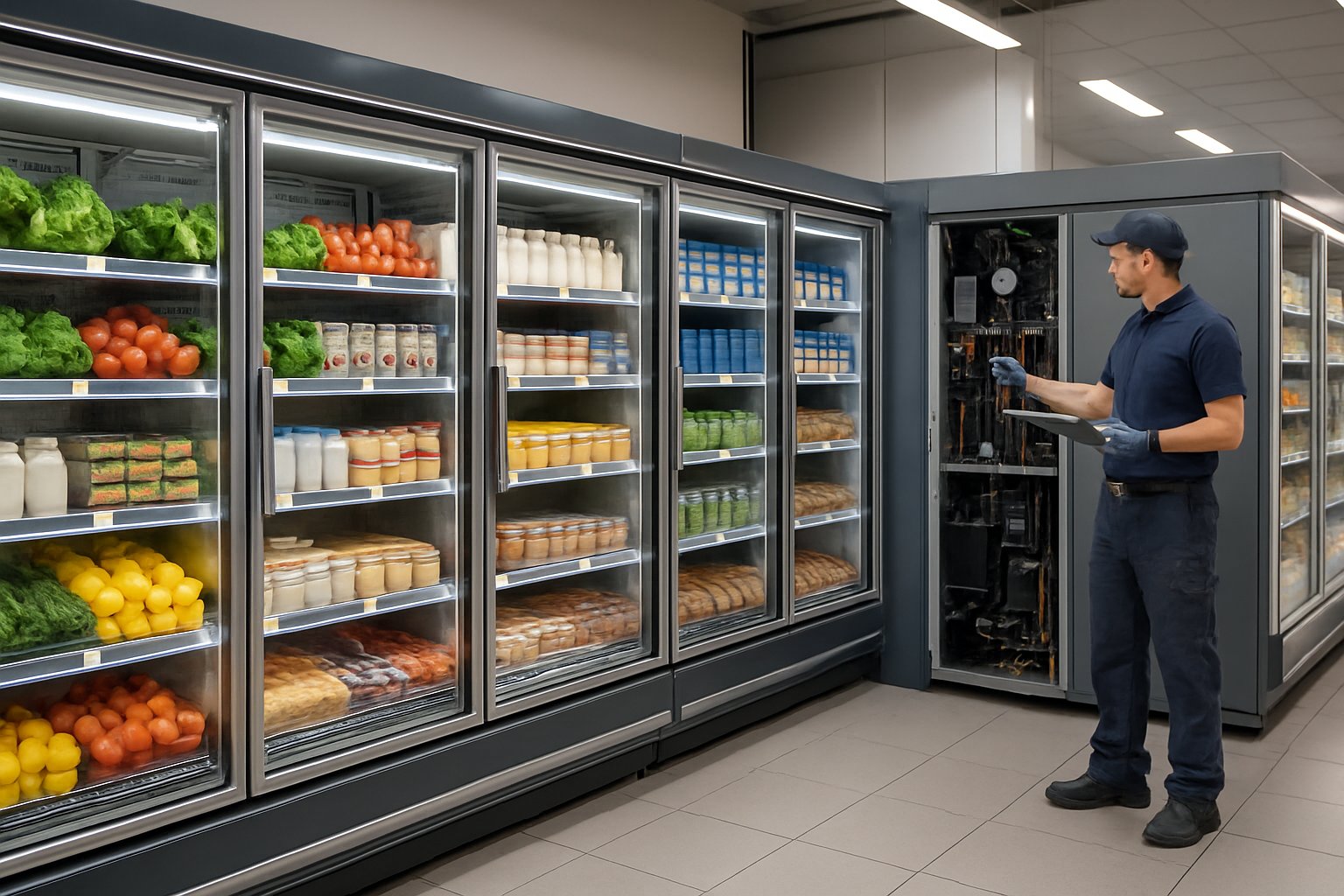
Getting the basics down starts with some thermodynamics, the key terms, and knowing what parts do what. These are the nuts and bolts that keep supermarket refrigeration running and food safe.
Basic Refrigeration Principles
Refrigeration systems move heat from one place to another using a cycle that repeats over and over. There are four main stages.
First is compression. The compressor squeezes the refrigerant gas, making it hotter and raising the pressure. That hot gas then heads to the condenser.
In the condenser, the refrigerant dumps its heat into the outside air or water. As it cools, it becomes a liquid but stays under high pressure.
Next up, expansion. The liquid refrigerant passes through an expansion valve, dropping the pressure and getting really cold.
Now it’s ready for the evaporator. The cold, low-pressure refrigerant flows through coils inside the refrigerated area, soaking up heat from the air or products and turning back into a gas.
That gas loops back to the compressor, and the cycle starts again. It’s a constant process, always moving heat out of the refrigerated cases and into the outside world.
Industry Terminology
Refrigeration techs use a lot of specific terms. Knowing these makes it easier to talk shop and figure out what’s going on with a system.
Superheat is how much hotter the refrigerant gas is than its boiling point. Subcooling is how much colder the liquid refrigerant is than its condensing temperature.
Evaporator temperature difference (or TD) is the gap between the evaporator and the space being cooled. Lower TD usually means better heat transfer.
Head pressure is the high-side pressure in the condenser. Suction pressure is the low-side pressure at the compressor inlet.
Refrigerant saturation temperature is the temp where liquid and gas both exist at a certain pressure. Change the pressure, and this temp changes too.
Defrost cycles clear ice off evaporator coils. Pull-down is the time it takes to chill a warm case down to the right temp.
Knowing these terms helps me diagnose issues and keep supermarket systems running smoothly.
Key Components and Functions
Supermarket refrigeration systems have several crucial parts that work together to keep things cool. Each one plays a specific role.
Compressors create the pressure difference that moves refrigerant around. Parallel rack systems use several compressors hooked up to shared lines.
Evaporators are the coils that soak up heat from display cases and walk-ins. Cold refrigerant inside them pulls warmth out of the air and products.
Condensers get rid of heat to the outside. They use air or water to cool down the hot refrigerant gas until it becomes liquid again.
Expansion valves control how much refrigerant enters the evaporators. TEVs and EEVs keep superheat levels where they should be.
Receivers store extra liquid refrigerant and help balance the system. They act as a buffer between the condenser and expansion valves.
Control systems keep an eye on temps, pressures, and how equipment is running. Most modern setups use electronic controllers that can tweak lots of settings automatically.
Refrigerant lines connect all the pieces. If these pipes are sized or insulated poorly, the system loses efficiency and can even have problems with heat gain or loss.
Supermarket Academy Structure and Levels
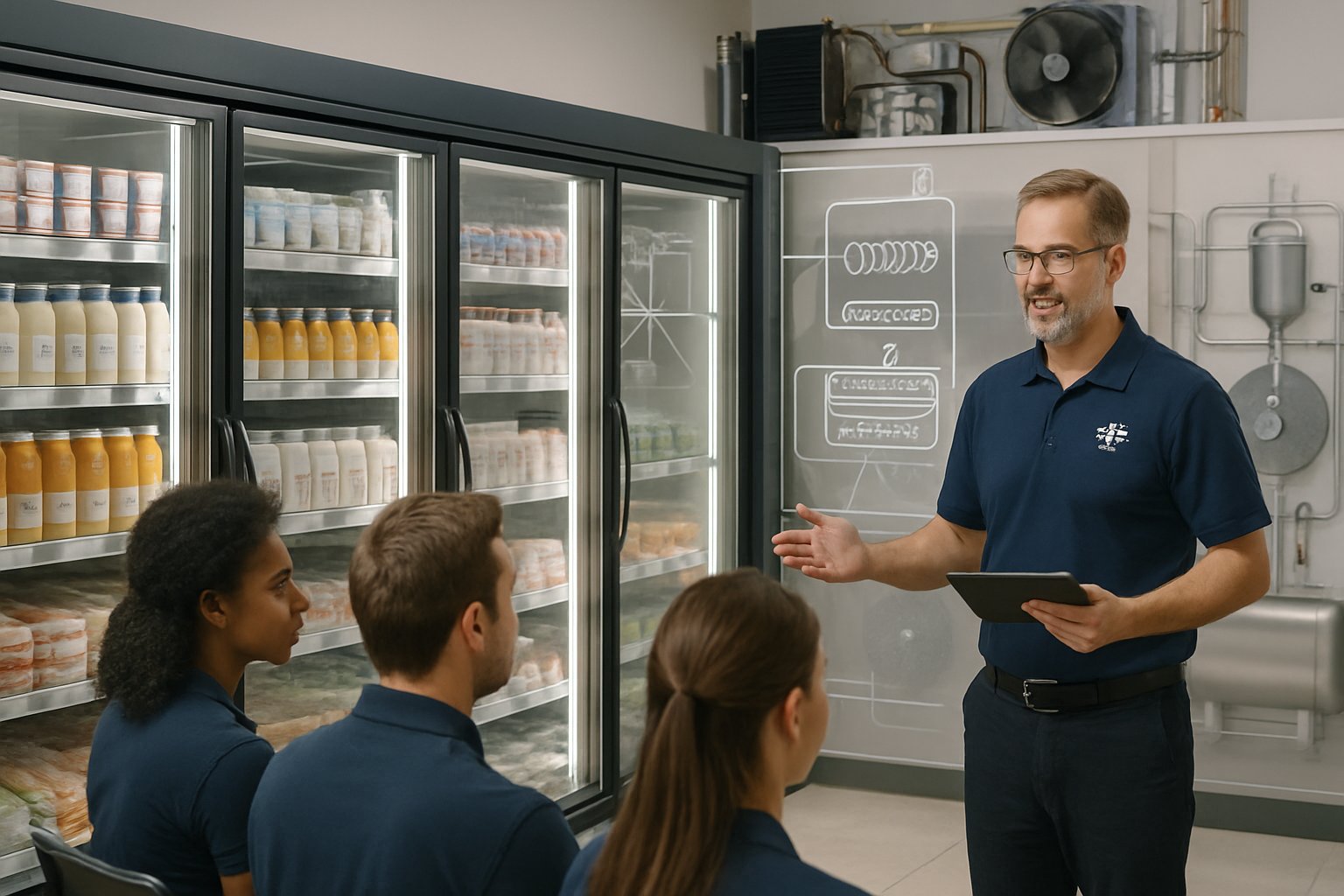
The Supermarket Academy breaks training into four levels, each one building on the last. Every level focuses on different systems and techniques, from the basics up to advanced troubleshooting.
Supermarket Academy Level 1 Essentials
Level 1 lays the groundwork for anyone getting into commercial refrigeration. It focuses on three core system types that, honestly, everyone should know.
The first major piece is Secondary Fluid Systems. These use a heat transfer fluid to cool spaces indirectly. In my experience, this setup cuts down on refrigerant use compared to direct expansion.
CO2 Pump Systems come next. They use carbon dioxide as both refrigerant and heat transfer medium. The training explains how these systems handle different pressures for different temperature needs.
Parallel Rack Systems round out Level 1. These tie several compressors together to share the load across different temperature zones. Most modern supermarkets use them for redundancy and better energy efficiency.
Level 1 includes hands-on practice, like reading diagrams and spotting components. It also covers basic maintenance to prevent the usual failures.
Advancing Through Levels 2, 3, and 4
Level 2 dives into more complex interactions. It teaches advanced P&ID reading skills, which really speed up troubleshooting.
Controller programming comes into play here. Supermarket systems rely a lot on digital controls to manage multiple circuits. The training walks through how these controllers keep energy use in check while holding temps steady.
Level 3 is all about advanced troubleshooting. The methods here help techs spot problems that affect more than one circuit.
Maintenance gets more advanced, too. The focus is on strategies that extend equipment life and cut down on emergency calls. Predictive maintenance is a big part of this.
Level 4 is the top tier of supermarket refrigeration training. Here, it’s all about system optimization and tackling the toughest problems. The goal is to analyze whole systems for ways to improve efficiency.
Certification Process and Outcomes
Each level has quizzes, assignments, and assessments. I need to finish all of these to move up.
The certification process uses real-world scenarios that mimic supermarket environments. I have to show I can apply what I know to actual system issues.
Once I finish all four levels, I get a certificate showing I’ve mastered supermarket refrigeration. This proves my expertise to employers and clients.
The on-demand format means I can move at my own pace. If something’s tricky, I can spend extra time on it. This setup really works for different learning styles and busy schedules.
Core Technologies in Supermarket Refrigeration
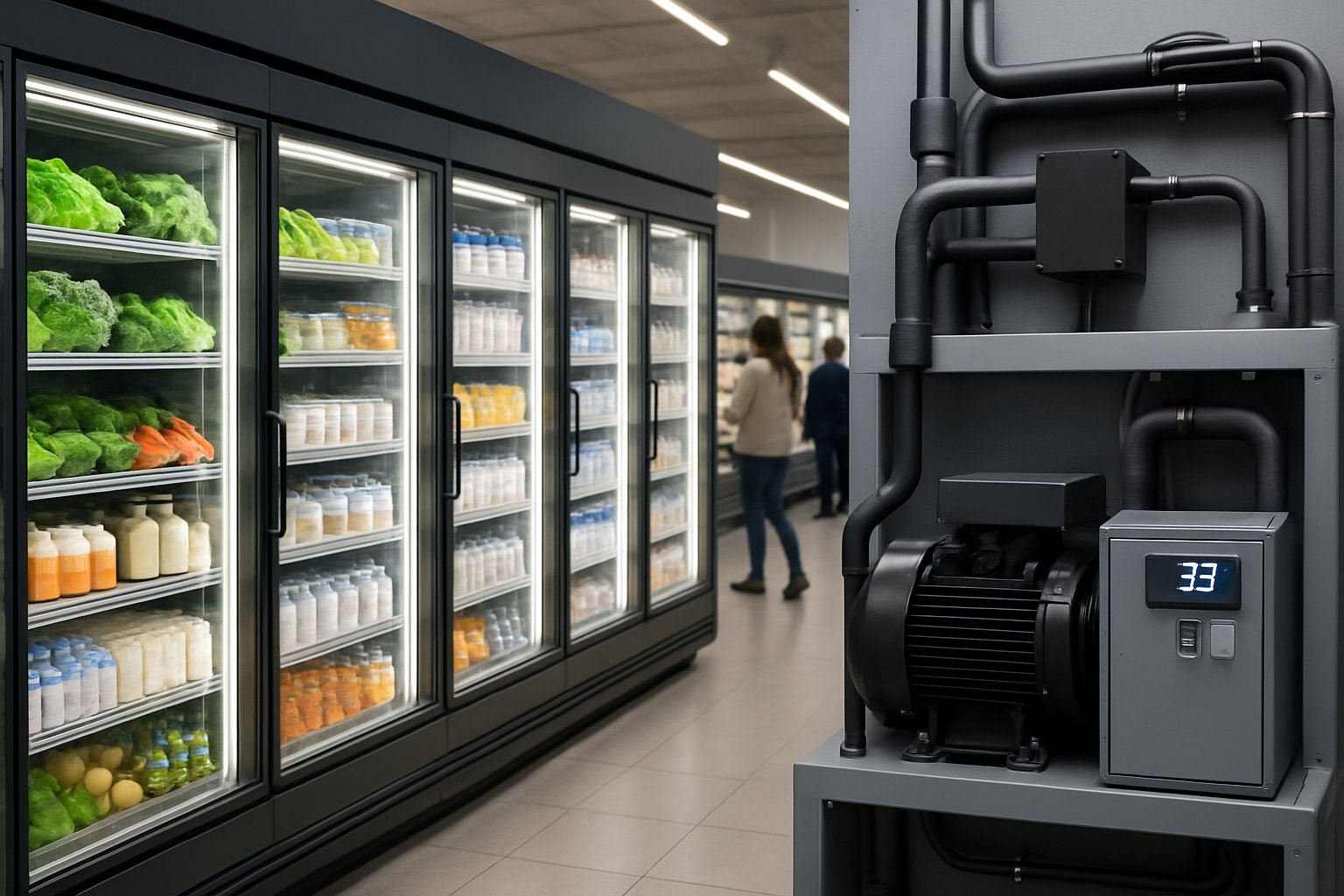
Modern supermarket refrigeration depends on three main system types. Each one handles different cooling needs and setups across display cases, walk-ins, and freezer sections.
Secondary Fluid Systems
Secondary fluid systems use an indirect approach. A primary refrigerant cools a secondary fluid—like glycol or brine—which then circulates through the refrigeration equipment.
The Supermarket Academy Level 1 covers these systems early on. They offer some real advantages.
The main refrigerant stays in a central machine room, so the store needs less refrigerant overall. It’s easier to spot leaks and do maintenance since everything’s in one place.
These systems work well in big stores with long line runs. The secondary fluid doesn’t face the same pressure limits as direct refrigerant, so installation is more flexible.
They also keep temperatures steady because the secondary fluid has thermal mass. That helps buffer temperature swings when compressors cycle.
CO2 Pump Systems Fundamentals
CO2 pump systems use carbon dioxide as the refrigerant, either in transcritical or subcritical setups. These systems pump liquid CO2 right to the evaporators.
CO2 acts as both refrigerant and secondary fluid here. The system has to keep CO2 in liquid form at the evaporators by managing pressure and pump speed.
Transcritical systems run above CO2’s critical pressure in hot weather, using a gas cooler instead of a traditional condenser. In cooler weather, they switch to subcritical mode, where CO2 can condense normally.
Pump control is crucial. Variable speed pumps adjust flow as cooling needs change. Pressure sensors keep tabs on the system to avoid cavitation and make sure there’s enough liquid.
CO2 systems need a different approach than traditional refrigerants. Technicians have to learn the unique pressure dynamics and how to operate the pumps safely.
Parallel Rack Systems Explained
Parallel rack systems group multiple compressors together to serve refrigeration loads at similar temperature ranges. Low-temperature racks handle frozen food cases. Medium-temperature racks serve dairy and produce sections.
Each rack contains several compressors that can run independently or together. This setup adds redundancy—if one fails, the others keep working.
Load sharing improves efficiency during different demand periods. The 4 Week Introduction to Supermarket Service covers servicing and troubleshooting parallel rack systems in detail.
Compressor staging controls which units run, depending on suction pressure or temperature needs. Lead-lag rotation helps spread wear evenly across all compressors.
Oil management systems keep proper lubrication in all operating compressors. Parallel racks use common suction and discharge headers.
This shared piping lets refrigerant and oil flow between compressors as needed. Proper piping design ensures oil returns equally to all compressors.
Capacity control happens through compressor staging and unloading. Some compressors use cylinder unloading or variable speed drives for fine adjustment.
System Controls and Troubleshooting Skills
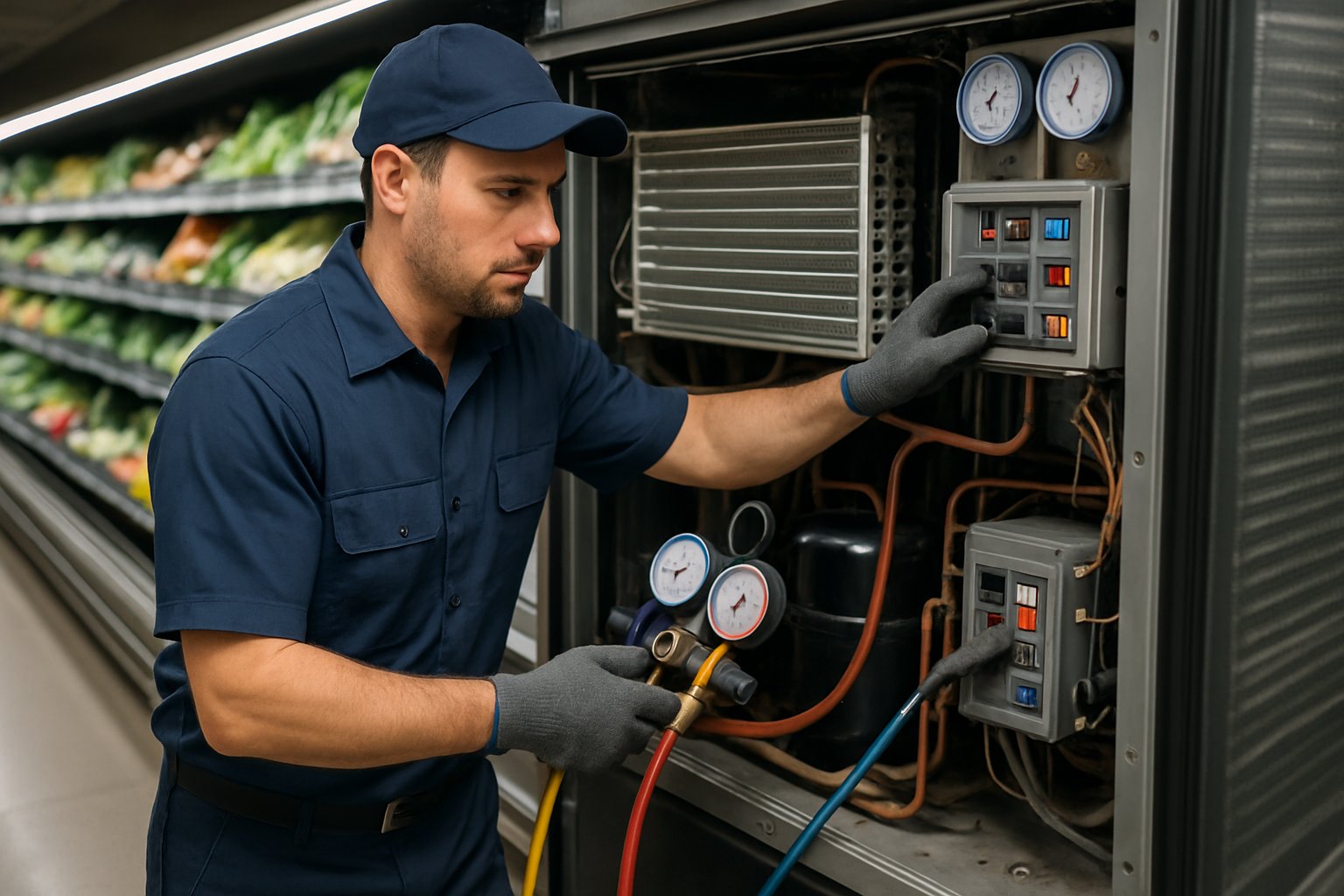
Mastering system controls means understanding process and instrumentation diagrams, pressure management, and proper lubrication. These skills form the backbone of effective supermarket refrigeration maintenance.
P&IDs for Supermarket Applications
Process and instrumentation diagrams act as blueprints for complex refrigeration systems. These drawings show how parts connect and interact within parallel rack setups.
Reading P&IDs correctly helps you spot valve locations, sensor positions, and control loops. Every symbol stands for specific equipment—compressors, condensers, expansion devices.
Diagrams include critical info about refrigerant flow paths and safety controls. Knowing these patterns helps you find system problems faster during service calls.
Most supermarket P&IDs stick to standard industry symbols and conventions. Once you learn the symbols, you can work on different brands and setups more easily.
The Supermarket Academy Level 2 covers advanced P&ID topics in their training program. Technicians who really get P&IDs can troubleshoot more efficiently.
High Pressure Control Principles
High pressure controls keep refrigeration systems safe from dangerous conditions. These devices monitor discharge pressure and shut down compressors if things get out of hand.
Typical cut-out pressures are 400 to 450 PSI for R-404A systems. CO2 systems run way higher—sometimes up to 1400 PSI during normal operation.
Manual reset controls need a technician to restart things after a shutdown. Automatic reset controls let the system restart when pressures drop back to safe levels.
Dirty condensers, refrigerant overcharge, and restricted airflow often cause high pressure trips. Blocked condenser coils can push head pressure 50-100 PSI above normal.
Control calibration matters—a lot. Systems need to shut down before hitting dangerous pressures. Regular testing helps avoid false trips that mess with store operations.
Oil Management Best Practices
Oil keeps compressors lubricated in parallel rack systems. Bad oil management leads to compressor failure and big repair bills.
Oil separators pull lubricant from hot gas discharge lines with 95-98% efficiency. The recovered oil returns to compressor crankcases through dedicated lines.
Oil level monitoring systems track lubricant in each compressor. Low oil triggers alarms and protective shutdowns to prevent bearing damage.
Ideal oil temperatures keep viscosity between 150-180°F. Cold oil gets thick and can’t lubricate moving parts well.
Regular oil analysis checks for contamination and additive breakdown. If moisture climbs above 50 PPM, that probably means leaks or poor evacuation during install.
Critical Components and System Optimization
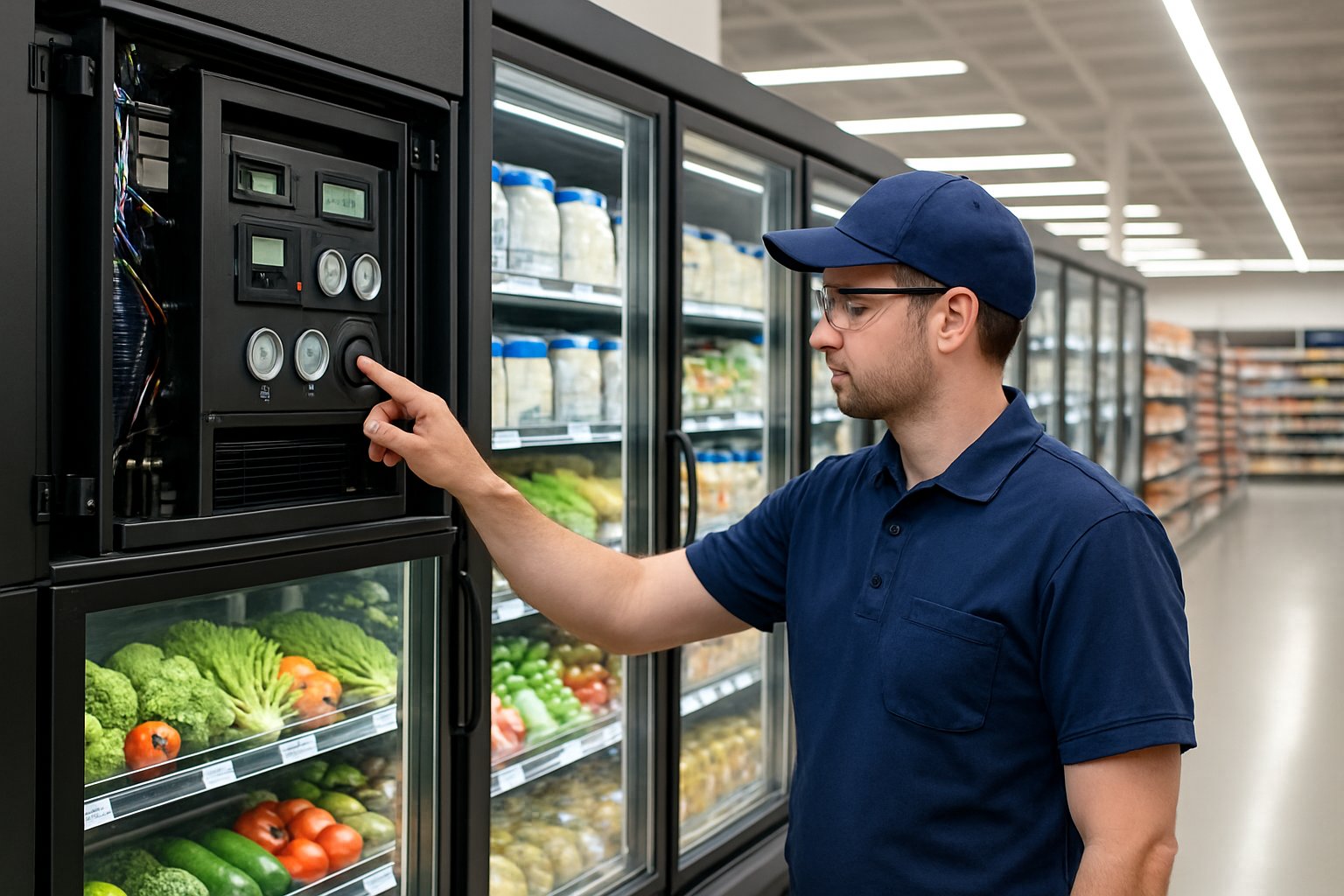
Supermarket refrigeration systems rely on precise control components that regulate temperature and pressure. Electronic expansion valves provide digital control. Compressor management prevents costly breakdowns and keeps everything running smoothly.
Electronic and Thermostatic Expansion Valves (EEVs & TEVs)
Electronic expansion valves are the modern standard for supermarket refrigeration. These digital devices adjust refrigerant flow using real-time temperature and pressure readings.
I’ve noticed EEVs offer much better accuracy than old-school thermostatic expansion valves. They can tweak settings in tiny increments—sometimes just 0.1 degrees.
TEVs work mechanically with a sensing bulb filled with refrigerant. The bulb reacts to temperature changes at the evaporator outlet, opening or closing the valve.
EEVs bring some real perks:
- Remote monitoring
- Precise superheat control
- Better energy efficiency
- Integration with building management systems
The Supermarket Academy Level 3 curriculum dives into both valve types. Students get hands-on troubleshooting for common expansion valve headaches.
TEVs still work fine for smaller jobs where digital control isn’t worth it. But most new supermarket installs favor electronic systems—they just perform and monitor better.
Electric Pressure Regulators
Electric pressure regulators keep pressure levels steady across refrigeration circuits. They prevent pressure swings that can damage equipment or mess with temperature stability.
I suggest calibrating these regulators regularly for accuracy. If they fail, compressors might work too hard, driving up energy costs.
Modern electric pressure regulators offer:
- Digital pressure displays
- Adjustable setpoints
- Alarms for pressure issues
- Data logging
These devices work with expansion valves to form a complete control system. When a pressure regulator fails, I’ve seen entire circuits go offline.
Proper installation matters. Pressure sensing lines need to be clear and insulated to prevent false readings.
Managing Compressor Issues
Compressor problems are the priciest failures in supermarket refrigeration. In my experience, proactive maintenance prevents most compressor breakdowns.
Common issues include oil management trouble, refrigerant leaks, and electrical failures. High discharge temps often mean restricted airflow or refrigerant problems.
Oil return systems need special attention in supermarkets. Multiple evaporators can create tricky piping that traps oil away from compressors.
Warning signs of compressor issues:
- Odd noises
- High discharge temperatures
- Low suction pressure
- Excessive vibration
The comprehensive refrigeration training courses teach technicians to spot these symptoms early. Finding problems early saves a fortune on replacements.
I always check oil levels during routine maintenance. Low oil can wreck a compressor in just a few hours.
Electrical problems usually come from voltage imbalances or dirty contacts. Regular inspections help avoid surprise failures during busy cooling periods.
Becoming a Lead Technician and Building a Career
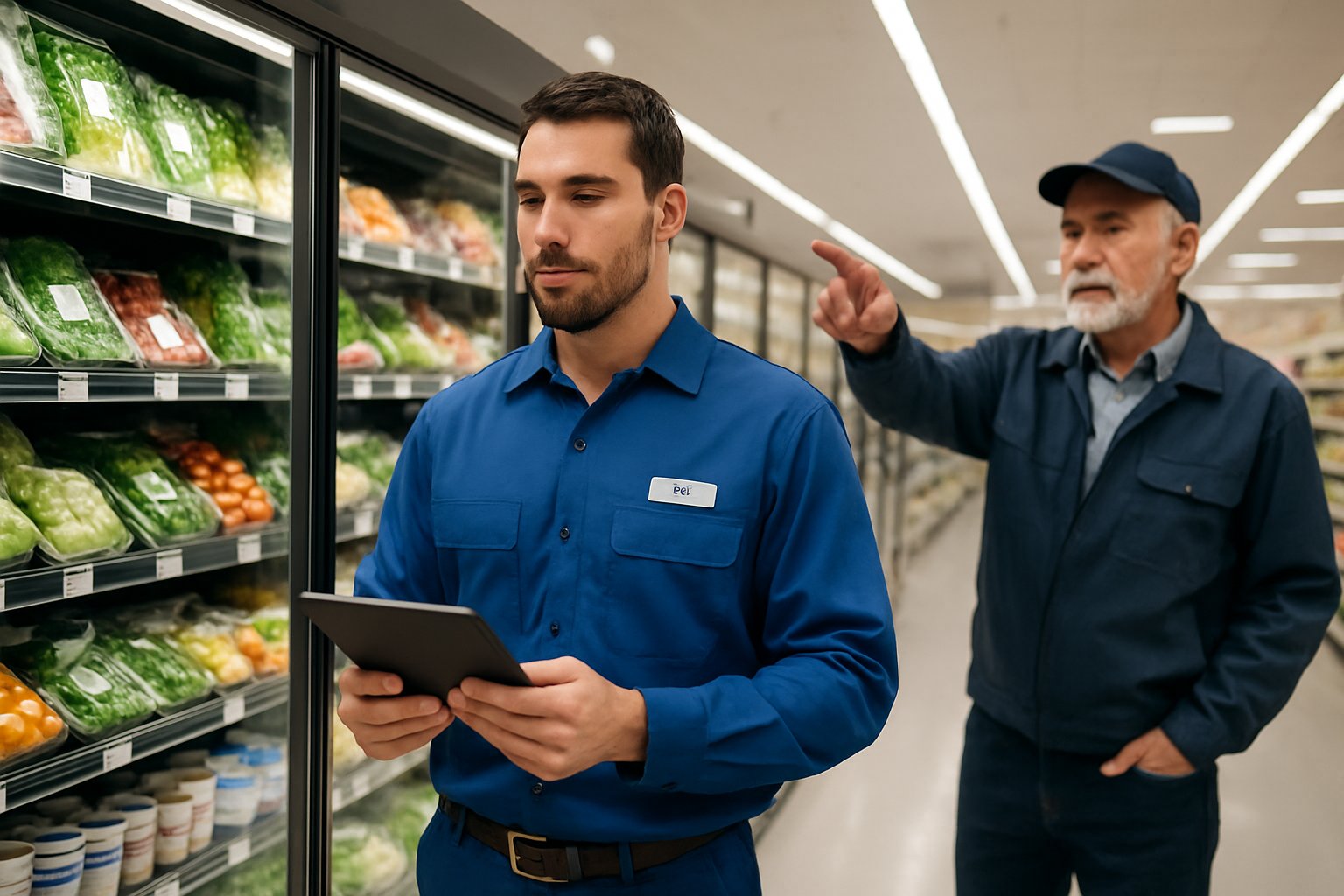
Moving from entry-level refrigeration tech to lead technician means mastering advanced skills, gaining hands-on experience, and chasing career development. Success comes from continuous learning and building expertise in complex supermarket systems.
Transitioning to Lead Technician Role
Stepping into a lead technician role means showing you know complex refrigeration systems inside out. I need to master basics like CO2 pump systems, parallel racks, and secondary fluid systems first.
The Supermarket Academy training program has four levels that build these skills. Level 1 covers basics. Level 4 goes deep into compressor issues and service procedures.
Key skills for lead techs:
- Understanding PNIDs and high pressure control
- Managing oil systems
- Troubleshooting EEVs and TEVs
- Operating electric pressure regulators
- Analyzing sequence of operations
Leadership matters too. Lead techs mentor junior staff and coordinate tough repairs. You’ve got to explain technical stuff clearly and juggle multiple tasks.
Companies notice technicians who push themselves to learn new systems. Taking advanced courses shows you’re serious about moving up.
Professional Growth Opportunities
The refrigeration industry offers several ways to advance. Lead positions pay more and come with bigger responsibilities—managing teams and complex projects.
Specializing in supermarket refrigeration makes you especially valuable. These systems are more complicated than basic commercial units and need specialized know-how.
Typical career path:
- Entry-level tech
- Experienced tech
- Lead technician
- Supervisor or service manager
- Regional manager or contractor
You can boost your pay by getting certified in certain systems. Companies pay more for techs who know CO2, advanced controls, and energy management.
Some techs move into training or start their own service companies. The skills you build as a lead tech set you up for those options.
Ongoing education is key. New technologies and regulations mean you’ve got to keep learning to stay sharp.
Confidence Building Strategies
Building confidence starts with mastering the basics before diving into advanced repairs. I practice on simpler systems first to sharpen my troubleshooting instincts.
Real-world scenarios help build practical experience. The comprehensive refrigeration training includes interactive workbooks that simulate actual service calls.
Ways to build confidence:
- Start with systems you know well
- Document successful repairs
- Learn from experienced techs
- Take detailed notes during training
- Practice troubleshooting regularly
Certifications validate your skills and show progress. Each training level you finish proves your growing expertise.
Mentorship speeds up confidence building. Learning from veterans gives insights you won’t get from books. I look for chances to work with seasoned pros.
Regular practice with diagnostic tools builds comfort. The more time you spend with meters, gauges, and control systems, the more confident you’ll feel taking on tough problems.
Advanced Procedures and Sequence of Operations
Mastering advanced procedures means understanding how systems work step by step. Every system follows a specific sequence that techs need to analyze to find and fix problems.
Executing Service Procedures
I follow a structured method for service procedures to keep things safe and protect the system. The most important part is isolating the system before starting any work.
I always complete pump-down procedures before opening refrigerant lines. I check for zero pressure on both high and low sides before disconnecting anything.
Compressor replacement follows a strict order. First, I recover all refrigerant with EPA-approved equipment. Then I disconnect electrical connections and mark wires for reassembly.
Oil management is crucial during service. I check oil levels in sight glasses and test acidity with field kits. If the oil’s contaminated, I remove it all before adding fresh lubricant.
Leak detection takes a few steps. I start with electronic detectors, then confirm with soap bubbles or ultrasonic tools. Advanced refrigeration service techniques help spot trouble areas quickly.
System Sequence of Operations and Analysis
I analyze operation sequences by watching which components activate during startup and shutdown. Each part runs in a set order based on temperature and pressure.
Defrost cycles follow set times—medium-temp cases usually defrost every 8-12 hours, low-temp cases every 6 hours or so.
Solenoid valves control refrigerant flow in different modes. I check timing with digital meters and pressure gauges together.
Pressure switch sequences protect compressors from unsafe conditions. High-pressure switches open at set points, usually 400-450 PSI for R-404A.
Controller programming decides when each sequence kicks in. I go through menus to make sure setpoints match design specs. The Supermarket Academy Level 4 covers these troubleshooting scenarios in depth.
Temperature pulldown follows a predictable pattern. I record case temps every 15 minutes during startup to confirm normal operation.
Frequently Asked Questions
Here are some core questions about supermarket refrigeration—from basics to modern tech and safety.
What are the fundamental principles of supermarket refrigeration systems?
Supermarket refrigeration uses the vapor compression cycle, just like your home fridge but on a much bigger scale. Refrigerants absorb heat as they evaporate and release it as they condense.
Most supermarkets use centralized systems called parallel rack systems. Multiple compressors work together to cool different temperature zones across the store.
The Supermarket Academy Level 1 covers basics like Secondary Fluid Systems, CO2 Pump Systems, and Parallel Racks. I think these are essential for anyone starting out.
Temperature control happens through evaporator coils in display cases and walk-ins. Refrigerant moves through these coils and pulls heat from food and the air around it.
How do you maintain and troubleshoot common issues in supermarket refrigeration units?
Start with regular visual checks on compressors, condensers, and evaporator coils. Scan for ice buildup, odd noises, or any signs of refrigerant leaks near fittings.
Dirty condenser coils are a common headache. They can drag down system efficiency by up to 15%, so I always look at those first if there’s a cooling issue.
Refrigerant leaks happen more often than you’d think. I use electronic leak detectors to sniff out the small ones—those can quietly wreck efficiency over time.
If you’re interested in digging deeper, the Supermarket Academy Level 4 covers advanced troubleshooting, especially with compressors and service techniques.
Oil management in rack systems is another thing to watch. If oil levels drop or oil isn’t returning properly, compressors can fail fast—so I keep a close eye on that.
What are the best practices for energy efficiency in supermarket refrigeration?
Keeping the refrigerant charge just right really matters. Too much or too little, and the system burns through energy—sometimes 20% more with just a 10% imbalance.
I clean condenser coils every month and get to evaporator coils every few months, depending on how dusty the store is. Clean coils move heat better, simple as that.
Temperature settings are more important than most folks realize. I stick with 0°F to -5°F for freezers and 35°F to 38°F for medium-temp cases.
Variable speed drives help a lot. They let compressors and fans run slower during off-peak times, which saves energy without anyone noticing.
Anti-sweat heater controls are easy to overlook. I adjust them based on humidity instead of just leaving them on full blast—it really cuts down on wasted energy.
Can you outline the safety protocols necessary for handling supermarket refrigeration equipment?
Personal protective equipment is non-negotiable. I wear safety glasses, gloves, and steel-toed boots, since refrigerants can cause frostbite if they touch your skin.
Whenever I work on electrical parts, I cut the power at the main disconnect and use lockout/tagout. That way, nobody accidentally fires up the equipment while I’m working.
EPA certification is a must for refrigerant handling. I never vent refrigerants and always use recovery gear to keep things safe and legal.
If I’m in a mechanical room or working near big equipment, I treat it as a confined space. Ventilation and gas monitors are a must, especially with the risk of leaks.
When relieving pressure, I go slow and use gauges rated for the job. It’s not worth rushing and risking a blowout.
What are the differences between commercial and supermarket refrigeration system designs?
Supermarkets usually run centralized rack systems with several compressors. In contrast, commercial kitchens rely on separate condensing units for each cooler or freezer.
Supermarket systems handle much bigger loads—100 to 500 tons of cooling, compared to maybe 5 to 20 tons in a typical commercial setup. That means the equipment and designs are on a different scale.
Temperature stability is a bigger deal in supermarkets. They need steady temps across lots of display cases, while commercial kitchens often have different requirements for each prep area.
Heat recovery is common in supermarkets, sometimes to heat the store or water. Commercial systems usually skip this, since their operations are smaller.
Maintenance is a different story too. Supermarkets centralize equipment in mechanical rooms, but commercial systems scatter their gear across rooftops or outside, which can make servicing a bit of a hunt.
How has supermarket refrigeration technology evolved in recent years?
I’ve noticed a big shift toward CO2 refrigeration systems, especially in larger supermarkets. These natural refrigerants seem to offer better efficiency and a smaller environmental footprint than the old-school options.
Electronic expansion valves are everywhere now, pretty much replacing the mechanical thermal ones. They give you tighter temperature control and help the system run more efficiently, even when conditions keep changing.
Smart monitoring systems are another game-changer. I can check temperatures, pressures, and energy use remotely, all through internet-connected controls.
Variable capacity compressors have taken over in new setups. They don’t just cycle on and off—they actually adjust their cooling output to match what’s needed at the moment.
Advanced defrost controls rely on several sensors to fine-tune defrost cycles. That means less wasted energy and more consistent product temperatures, even during defrosting.